01
Evidence
can support a judgement
without making it.The record is not the encounter.
Clinical work develops across evidence, consent, decisions, treatment and follow-up.
ADLLR preserves the context in which that record came to exist.
Explore Encounter Workspace →A clinical record is the result of work that developed over time.
ADLLR keeps that work connected to the record it produced.
What was known still matters.
A later correction can change what is known now without rewriting what was available then. ADLLR preserves both.
Plan and administration remain separate.
can support a judgement
without making it.can describe intended care
without proving care occurred.can add new evidence
without rewriting the encounter.Clinical work is distributed across notes, images, consent, systems and people.
Later review should begin with the encounter in context, not an attempt to rebuild it from fragments.
At reviewThe work remains connected to the record it produced.
For environments where consent, evidence, treatment and follow-up must remain connected without collapsing their authority.
Where clinical authority and operational action must remain distinct.
Where the encounter develops across locations, systems and time.
Where responsibility must remain legible across every handover.
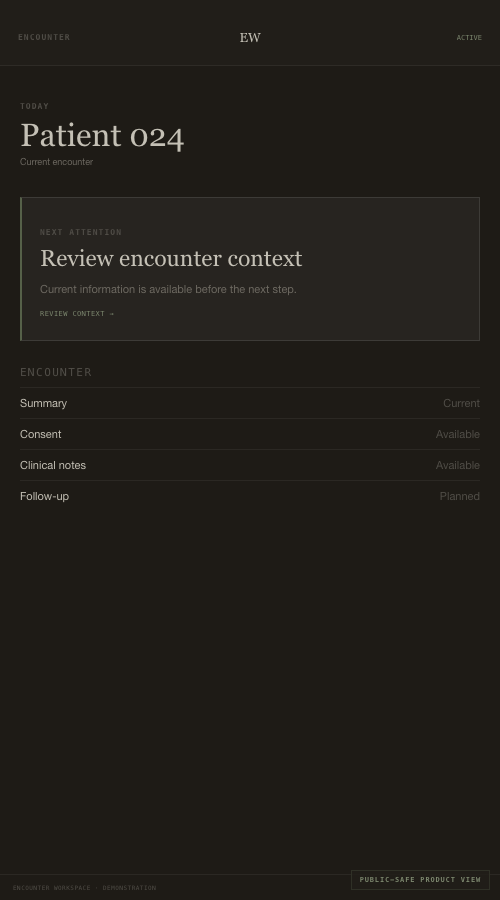
Encounter Workspace
One working environment for readiness, consent, clinical evidence, planning, treatment and follow-up. Its first commercial configuration is medically supervised aesthetics.
ADLLR is the system. Encounter Workspace is the desk.Explore Encounter Workspace →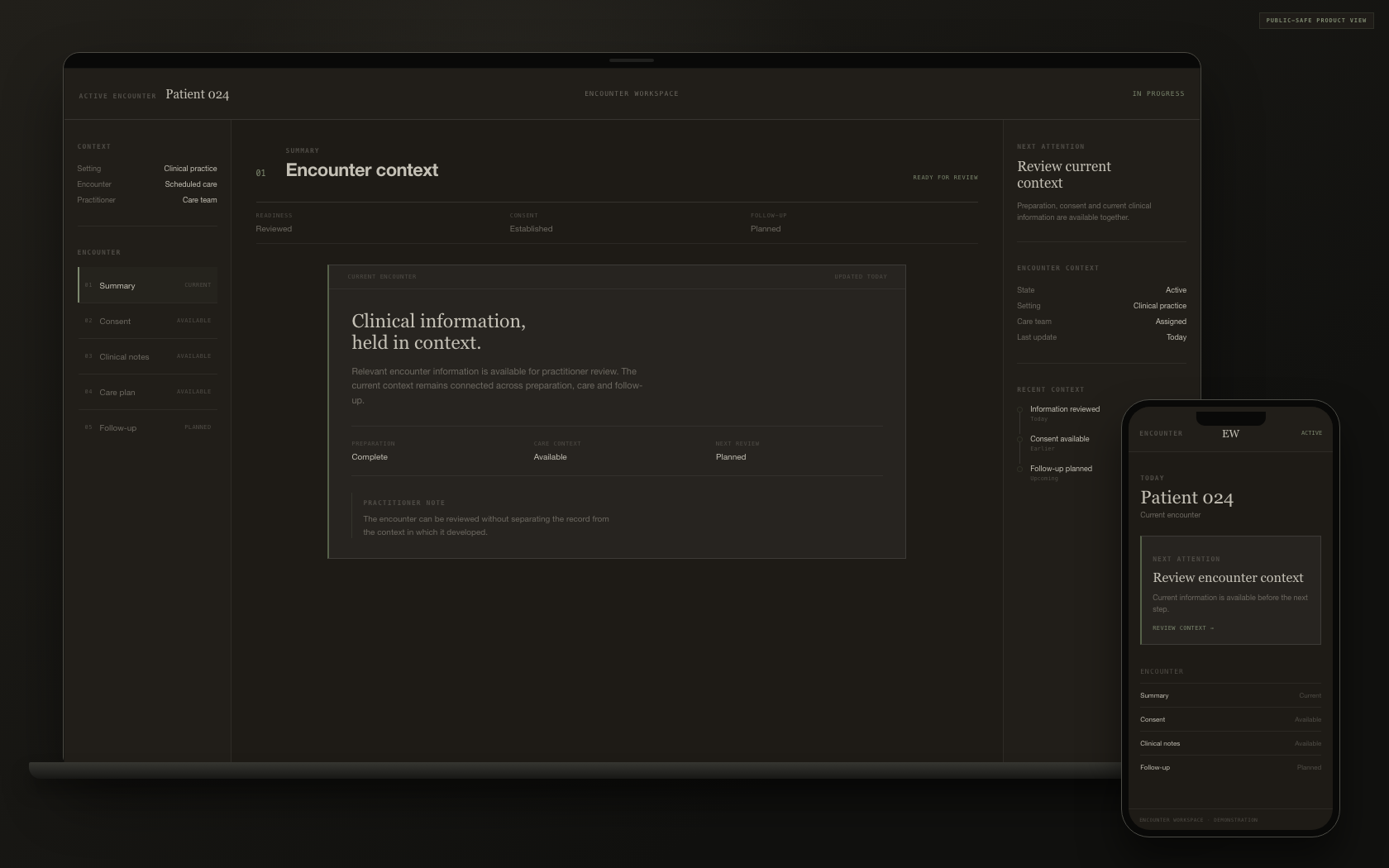
Shared architecture for systems where authority, evidence and consequence must remain explicit.
Explore ORA →We begin with the Encounter: what is authoritative, which evidence matters, where clinical authority sits, what may lawfully change and what must be established afterwards.